
 The Standard Group Plc is a multi-media organization with investments in media
platforms spanning newspaper print
operations, television, radio broadcasting, digital and online services. The
Standard Group is recognized as a
leading multi-media house in Kenya with a key influence in matters of national
and international interest.

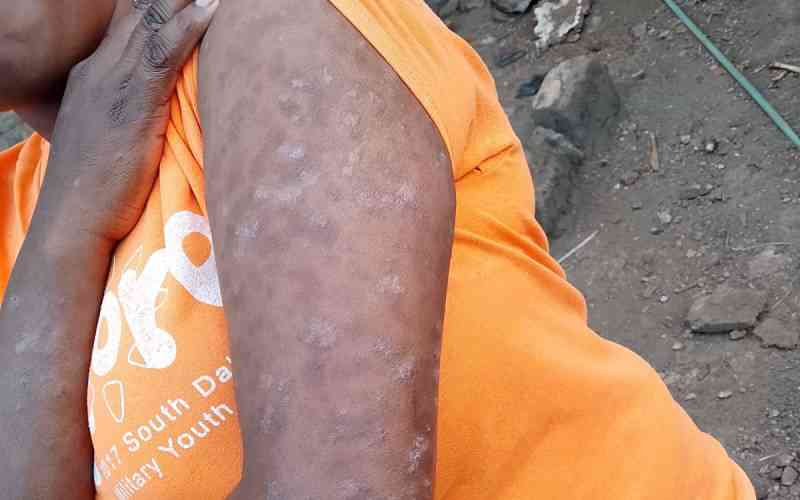
Beyond the scaly patches, psoriasis can bring stigma, emotional distress and costly treatment, leaving patients fighting battles that many people never see.
For more than 20 years, Mary Wangeci Mbugua has lived with psoriasis, a chronic skin condition that has tested her physical comfort, confidence and resilience. Yet, as she watches her daughter grow, motherhood reminds her that her life extends far beyond the condition.
“Being a mother and living with psoriasis has taught me strength, patience, and resilience. I believe that psoriasis is part of my story, but it does not define who I am,” she says.
Mary, a self-employed private chef at Kesii Kitchen, first noticed changes on her scalp before the condition spread to her back, legs and hands. Initially, she thought it was an ordinary skin problem that would disappear with treatment.
Instead, years passed as she visited different hospitals and received treatment for fungal infections without improvement.
Her breakthrough came when a friend referred her to a doctor at a skin clinic. A biopsy was performed, leading to a diagnosis of psoriasis. She was subsequently referred to a dermatologist for further advice and treatment.
“At that time, I was not even able to pronounce the word ‘psoriasis’,” she recalls.
The diagnosis brought answers but also uncertainty. Mary had to come to terms with living with a chronic condition requiring ongoing management, while worrying about how people would react to her skin.
Before learning to accept herself, she wore polo-neck tops and long-sleeved clothes to conceal the affected areas and avoid unwanted attention.
Discovering the Psoriasis Association of Kenya (PAK) changed her outlook. Meeting other people living with the condition, including women who confidently wore short-sleeved clothes and skirts, helped her understand that she did not have to hide her skin to deserve acceptance.
“Sometimes, you can be smiling on the outside while struggling emotionally,” she says.
Mary continues to experience itching and flare-ups, with changes in weather affecting her skin. Managing the condition also comes with financial pressure. She says she was recently advised that a dermatologist's consultation and medication would cost approximately Sh25,000, an amount she could not readily afford.
The expenses, she explains, can be overwhelming alongside family responsibilities and the cost of running a business.
She wants greater access to affordable specialist care and medication so patients do not have to interrupt treatment because of financial difficulties.
Her message to Kenyans is simple: psoriasis is not contagious.
“You cannot catch psoriasis by touching someone, hugging them, shaking their hand, sharing food or utensils, or sharing clothes,” she says, urging communities to stop isolating or treating people differently because of their skin.
For Mary, raising awareness is an opportunity to help others live confidently and challenge the misconceptions that make an already difficult condition more isolating.
A childhood marked by misunderstanding
Peter Ngugi Gatere, an Economist who works at Kenya Investment Authority (Invest Kenya) as an investment lead for leather and meat investments, also knows the cost of delayed diagnosis and social rejection.
Gatere, who was formally diagnosed with psoriasis in 2003, had experienced scaly, peeling skin since childhood. Each morning, he would find whitish flakes scattered across his bedsheets.
He was treated for fungal infections and dandruff, but the treatments failed. At one point, some people, including a few doctors, suspected he had HIV/AIDS.
His journey towards a diagnosis began when he was sent to a pharmacy in Nanyuki, where he met a woman whose mother also had psoriasis. She connected his mother to the late Dr Hosea Waweru, a dermatologist known for his work on the condition.
Receiving a diagnosis brought relief because he finally had an explanation for what was happening to his skin. However, he was uncertain whether other people shared the same experience.
Joining PAK eventually connected him with a community of people living with psoriasis.
The condition had affected his schooling. He says he missed an entire academic year because no school was willing to accommodate him. The physical symptoms were also painful, particularly in the dry climate of Laikipia, where his skin frequently cracked. Scratching left affected areas sore and bleeding.
The emotional burden was equally difficult.
“One particular incident while I was in high school is when one of my teachers insensitively asked what the difference was between me and a frog,” he recalls.
Gatere says repeatedly having to explain his skin condition was psychologically exhausting. The experience reflects how stigma can compound the challenges of living with a chronic illness.
“Treatment has also been expensive. Consultations alone can cost at least Sh5,000, while medication and tests can push monthly expenses to Sh20,000. Travelling from a rural county to access specialist services adds to the financial burden,” Gatere explains.
He has experienced treatment interruptions because of costs and side effects. Methotrexate, taken alongside folic acid, worked well for him.
Since late 2021, Gatere has been in remission and has not experienced discomfort. He identifies stress as a major trigger for his flare-ups.
His experience underscores the importance of timely diagnosis, appropriate treatment and supportive communities for people living with psoriasis.
What causes psoriasis?
Dr Sylvia Baraza, a skin specialist at Adorn Skin Solutions in Eldoret, describes psoriasis as a chronic, immune-mediated inflammatory skin disease.
“The immune system mistakenly activates T-cells, which release inflammatory signals that accelerate the skin-cell renewal cycle. Instead of the normal 28 to 30 days, this process can take just three to five days, resulting in a build-up of immature skin cells on the skin's surface,” says Baraza.
“The result is often raised, well-defined red patches covered with silvery-white scales. These commonly appear on the scalp, elbows, knees and lower back,” she adds.
According to the medic, psoriasis develops through a combination of genetic predisposition and environmental triggers. Factors that may contribute to flare-ups include certain infections, psychological stress, skin trauma, obesity and smoking.
The condition can affect people of different ages and is not caused by poor personal hygiene.
Most importantly, Dr Baraza emphasises, psoriasis is not contagious. It cannot be transmitted through touch, shared utensils or other ordinary social contact.
Yet this misconception continues to cause harm, with patients facing exclusion from workplaces, churches, family gatherings and other social spaces.
“Psoriasis is not curable with current treatments, but it is very much controllable,” she says. “Many patients can achieve prolonged periods of clear or nearly clear skin with appropriate management.”
Treatment depends on the severity of the disease, the areas affected, whether the patient has associated joint problems, and individual circumstances. Options may include topical medicines, phototherapy and systemic treatments, including biologic medicines for selected patients.
Dr Baraza cautions against relying on unproven herbal remedies or skin-lightening products, which may delay appropriate care.
“Patients should seek professional advice rather than stopping or changing prescribed treatment without consulting their healthcare provider,” she says.
The cost of care and the emotional toll
For many patients, accessing treatment remains a significant challenge.
Dr Baraza says Kenya has fewer than 100 registered dermatologists serving a population of more than 55 million, with specialists concentrated mainly in Nairobi. Patients in remote counties may have to travel long distances to obtain specialist care.
“Even when treatment is available, consultation fees, medicines and monitoring tests can make sustained care difficult to afford. Limited access to phototherapy and specialist services outside major towns adds to the challenge,” she explains.
Misdiagnosis at primary-care level is another concern. Some patients spend years being treated for fungal infections or eczema before receiving the correct diagnosis.
Dr Baraza advocates training clinical officers and nurses to recognise and manage mild psoriasis, alongside improving referrals for patients who need specialist care.
The consequences extend beyond the skin. According to the specialist, depression and anxiety affect a significant proportion of people living with psoriasis. Visible symptoms and repeated experiences of rejection can undermine self-esteem, relationships and emotional wellbeing.
This is why, she says, treatment must address the whole person rather than focusing solely on skin lesions.
Patients should also be supported to recognise possible flare-up triggers, attend follow-up appointments and protect their mental health.
A call for understanding
As the world marks World Psoriasis Day, Mary and Gatere's experiences highlight the need to look beyond the visible symptoms and recognise the people living with the condition.
Mary urges healthcare providers to offer early and accurate diagnosis, clear information and compassionate care. She also calls for greater public awareness and more affordable dermatological services and medication.
For those living with psoriasis, her message is one of hope: seek appropriate care, find supportive communities and refuse to let the condition define your worth.
Dr Baraza says families and communities also have a role to play. Simple acts of acceptance can help reduce isolation, while stigma can increase stress and make the experience of living with the condition more difficult.
“Psoriasis is a medical condition like diabetes or hypertension — it is not your fault, it is not a reflection of your cleanliness, and it is not contagious,” she says.
She calls for more dermatologists across Kenya's 47 counties, affordable phototherapy services in regional hospitals and improved access to essential psoriasis medicines.
For Mary and Gatere, the message is ultimately about dignity: people living with psoriasis deserve respect, equal opportunities and the chance to live without shame.






 join
