
 The Standard Group Plc is a multi-media organization with investments in media
platforms spanning newspaper print
operations, television, radio broadcasting, digital and online services. The
Standard Group is recognized as a
leading multi-media house in Kenya with a key influence in matters of national
and international interest.
The Standard Group Plc is a multi-media organization with investments in media
platforms spanning newspaper print
operations, television, radio broadcasting, digital and online services. The
Standard Group is recognized as a
leading multi-media house in Kenya with a key influence in matters of national
and international interest.

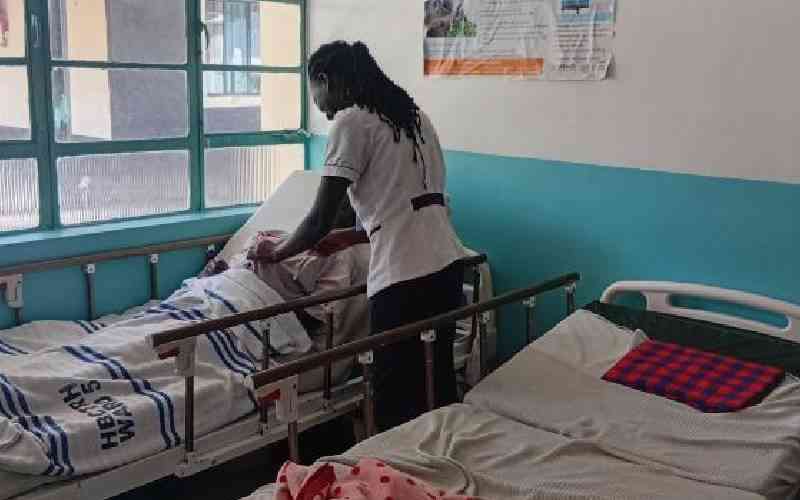
Kenya loses at least 15 mothers and 92 newborns every day, not because the causes are unknown, but because solutions are still not consistently implemented.
As global health experts prepare to gather in Nairobi next week for the International Maternal Newborn Health Conference (IMNHC 2026), the country is confronting a stark reality. Despite progress made in access to care, preventable deaths continue to occur within health facilities.
According to the Ministry of Health’s March 2026 report, about 5,000 women die annually from pregnancy and childbirth-related complications, with a maternal mortality ratio of 355 deaths per 100,000 live births.
Newborn deaths remain high at approximately 30,000 each year, many occurring within the first week of life.
Health experts say the persistence of these deaths reflects systemic failures in quality of care.
“These are preventable deaths. The problem is not a lack of knowledge. There are gaps in supplies, staffing, and timely care,” said Edward Serem, the Head of Division of Reproductive, Maternal, Newborn, Child and Adolescent Health at the Ministry of Health.
Postpartum haemorrhage accounts for 37 per cent of maternal deaths, followed by eclampsia and infections.
For newborns, prematurity, birth asphyxia, and sepsis remain the leading causes, conditions that can be managed with timely and effective care.
- Project reduces maternal and baby deaths in three counties
- Experts warn as C-Section rate surpasses WHO guidelines
- Fear and risk: How Kenyan women fight to survive in labour rooms
- Sh6.8b programme to help reduce maternal, infant deaths
Keep Reading
Over the past decade, Kenya has significantly improved access to maternal health services.
Nearly all women attend at least one antenatal care visit, while 89 per cent of births are attended by skilled personnel and 82 per cent occur in health facilities.
Experts say the crisis lies in what happens after mothers reach the hospital. “You can have a theatre, but no personnel, no blood, or no oxygen. That is not quality care,” Dr Serem said.
A 2024 assessment found that only 37 per cent of facilities meet the full standards for basic emergency obstetric and newborn care, leaving many unable to manage complications.
Shortages of health workers, essential supplies, and functional equipment continue to undermine care. Weak referral systems also delay emergency response, sometimes forcing patients to rely on motorcycles instead of ambulances.
The burden remains uneven across the country. Counties such as Turkana, Mandera, and Migori record some of the highest deaths, while others like Kirinyaga and Makueni show steady improvement, highlighting disparities in leadership and resource prioritisation.
The IMNHC 2026 conference, set for March 23 to 26 in Nairobi, is expected to bring together about 1,800 participants from more than 100 countries under the theme “Moving Forward Together.”
It will provide a platform to assess progress, share solutions, and confront persistent gaps in maternal and newborn health.
Despite the challenges, Kenya has made measurable strides. The government has expanded service coverage, strengthened policy frameworks, and trained thousands of health workers in emergency obstetric and newborn care.
As Kenya hosts the global conference, it is positioning itself as both a leader in innovation and a country still grappling with preventable deaths. Until the gap between access and quality is closed, experts warn, mothers and newborns will continue to die, despite medics knowing how to save them.













 join
join