
 The Standard Group Plc is a multi-media organization with investments in media
platforms spanning newspaper print
operations, television, radio broadcasting, digital and online services. The
Standard Group is recognized as a
leading multi-media house in Kenya with a key influence in matters of national
and international interest.
The Standard Group Plc is a multi-media organization with investments in media
platforms spanning newspaper print
operations, television, radio broadcasting, digital and online services. The
Standard Group is recognized as a
leading multi-media house in Kenya with a key influence in matters of national
and international interest.

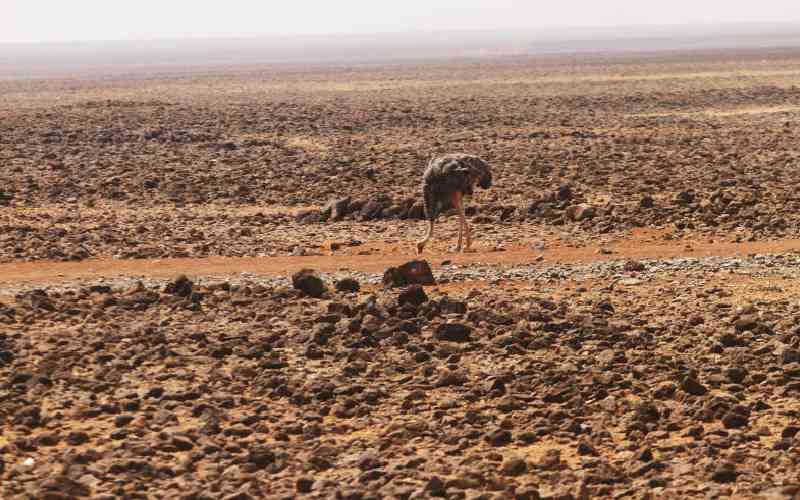
As drought intensifies across Kenya’s wild landscapes and human settlements encroach on wildlife habitats, veterinarians are increasingly acting as first responders to a growing ecological crisis.
Their work — once centred on health monitoring — now also involves managing nutritional stress and conducting rescue operations amid climate change.
Prolonged dry spells have depleted water sources and forage across Kenya’s arid and semi‑arid regions. Animals are forced to travel greater distances in search of food and water, and weakened ones become more vulnerable to disease and injury.
Rising temperatures and erratic rainfall have disrupted seasonal feeding and breeding patterns, compounding stress on already fragile ecosystems.
On the frontline of this crisis are wildlife and livestock vets, whose roles have expanded dramatically.
One such vet is Florence Kang’ethe, a resident veterinarian at Ol Pejeta Conservancy.
Her workday begins before first light — checking on semi‑captive animals, confirming they have eaten and are not showing signs of illness, and preparing for field calls. But she says the greatest strain now comes from climate‑induced stress on wildlife.
- Worrying pattern that fuels country's droughts cycle
- Why herds can't recover before the next drought
- Mothers, babies battle starvation as Turkana drought crisis worsens
- Fighting climate change: Kajiado residents convert seasonal river into a resilience lifeline
Keep Reading
“We have to monitor all wildlife closely, check if they are feeding well, recovering from injuries, and coping with the stress. Their health and behaviour are changing because the combined pressure from people and climate stress is relentless,” she said.
Squeezed habitats
She added, “Human–wildlife conflict has squeezed habitats, so rhinos, elephants, and other species are fighting more often over territory and food.”
Mukami Ruoro Oundo of the Kenya Wildlife Service responds to cases as animals displaced from degraded habitats appear in residential areas in search of food and water.
“In urban areas, we face a growing challenge of urban wildlife, and many of the injuries we treat are caused intentionally or unintentionally by human activity. People often ask why we don’t ‘let nature take its course,’ but we took an oath to safeguard the health of all animals. When we see a wild animal in pain, that’s a call we cannot ignore,” she said.
Mukami added that as natural habitats shrink and settlements expand, species once restricted to remote reserves now roam towns and peri‑urban areas, complicating disease control, public safety, and conservation efforts.
Another vet, Gabriel Ouma, says there is a rising risk of disease spreading between wildlife, livestock, and domestic animals.
“We are seeing a worrying rise in disease transmission between domestic animals and wildlife, and vice versa,” he said.
Veterinary experts point to a number of diseases as particular causes for concern: Rift Valley Fever, Foot and Mouth Disease, East Coast Fever, Malignant Catarrhal Fever, anthrax, and rabies.
In a drought‑stressed environment — with patchy vegetation, shrinking water points, and weakened animals — disease vectors such as ticks, flies, and mosquitoes can thrive, increasing the risk of transmission among domestic and wild animals. Globally, there are more than 200 known zoonotic diseases, accounting for about 60 per cent of all human infectious diseases, with over 75 per cent of emerging diseases originating from animals.
In Kenya, national assessments rank anthrax, trypanosomiasis, rabies, brucellosis, and Rift Valley Fever among the top zoonotic threats.
Surveillance reports show these diseases continue to pose serious public health risks, with rabies alone estimated to cause around 2,000 human deaths each year, though the true number may be higher due to under‑reporting.
Although there is no recent public nationwide study that definitively links the 2023–2024 drought cycles to increased zoonotic disease spillover in Kenya, veterinary and ecological experts warn that current conditions are creating a risk environment that could facilitate such transmission.
In many conservancies and mixed‑use rangelands, vets now monitor not only wildlife but also livestock health, tracking where animals drink and graze.
“In these mixed landscapes, we’re not just treating livestock, we’re also using them as a tool for rangeland management.
‘‘By regularly cattle-dipping herds, we control external parasites that could easily jump to wildlife, but we also help maintain healthier grazing patterns.
‘‘When livestock move through the conservancy after dipping, they suppress invasive plants and open up fresh pasture that benefits both cattle and wild animals.
‘‘It’s a practical, science‑guided way of using livestock to support ecosystem health,” Dr Kang’ethe said.








 join
join