
 The Standard Group Plc is a multi-media organization with investments in media
platforms spanning newspaper print
operations, television, radio broadcasting, digital and online services. The
Standard Group is recognized as a
leading multi-media house in Kenya with a key influence in matters of national
and international interest.
The Standard Group Plc is a multi-media organization with investments in media
platforms spanning newspaper print
operations, television, radio broadcasting, digital and online services. The
Standard Group is recognized as a
leading multi-media house in Kenya with a key influence in matters of national
and international interest.

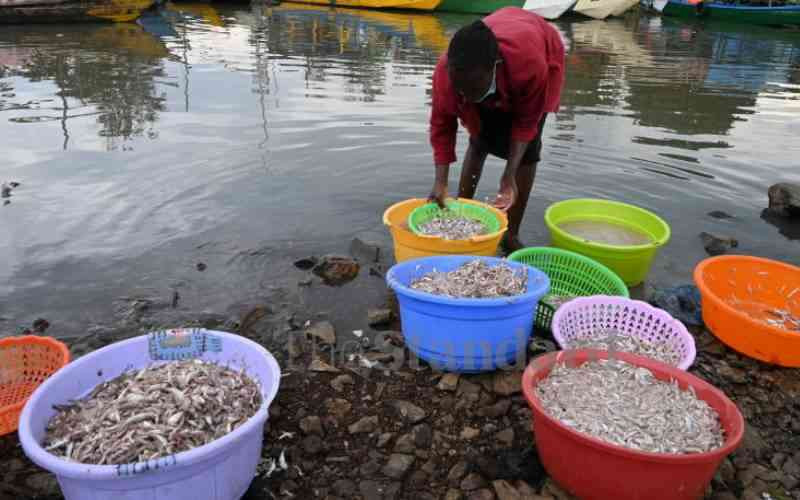
Toxicologists are calling for an urgent national dialogue on the safety of the water and food being consumed across the country, a debate sparked by ongoing public conversations around the safety of fish in Lake Nakuru.
While public attention has largely focused on political interests and the harassment of young fishermen at the lake, independent institutional assessments have continued to sound an alarm.
The crisis surrounding Lake Nakuru revolves around rising water levels, a rapidly growing city whose waste finds its way into the lake basin, poorly regulated industrial runoff and fishing.
Commenting on existing reports, toxicologists have issued a stark warning regarding the immediate and long-term effects of eating fish loaded with heavy metals over a longer period of time.
According to Dr Joseph Mukundi, a toxicologist, regular consumption of food contaminated with heavy metals beyond recommended safety standards severely damages human health. Heavy metals like lead find their way into the environment through airborne contamination, such as regional vehicular emissions and industrial discharges. When the rains fall, these toxins are washed into water bodies, settling directly into the food chain.
“For fish, when it rains, they accumulate these metals in small, repeated doses,” Dr Mukundi explains. “It is a process of constant, long-term buildup.”
Recent peer-reviewed studies and joint research published by scientists from various institutions point to dangerously high levels of arsenic, chromium, and nickel, metals heavily linked to local industrial facilities.
- Pooping the right way: the three Ps
- Toxic chemicals threatening Kenya's children, women
Keep Reading
Dr Mukundi noted that while some metals can occur naturally in the soils, the concentrated levels currently being flagged are driven by chemical agricultural runoff and industrial effluent.
What happens when these metals enter the human body?
When these metals are constantly ingested through contaminated water or bioaccumulated fish, they aggressively attack vital organs. Lead targets the nervous system and kidneys, leading to cognitive decline, neurological damage, and severe renal stress. Other metals like arsenic and chromium attack cellular DNA and liver tissue, acting as carcinogens.
“When heavy metals are ingested for a long time, they accumulate and become carcinogenic, meaning they can cause cancers,” Dr Mukundi warned. “Any level higher than normal is a slow-motion death sentence for the kidneys and nervous system.”
Dr Mukundi also warned of the need to check on the country’s current water treatment safety nets. He said that most water companies are built to fight pathogens, bacteria, and solid waste, but are unequipped to handle dissolved chemicals.
Most water service companies do not filter chemicals. This is because the infrastructure that can fully do this is very expensive," Dr. Mukundi noted.
This infrastructure gap, he says, means that even if water looks clear and passes through standard treatment facilities, the invisible, dissolved toxic loads of heavy metals can flow straight to household taps completely unchecked.
To confront the crisis, he argues that Kenya should launch an immediate, coordinated investigation into the health of the food and water that people drink. He also called on local public health departments to audit patient demographics at hospitals situated near these key water bodies so that researchers can finally connect the dots between water pollution and certain diseases.
“It is high time we expand our research to look into the details where these diseases mostly occur and what the patients do so that it can help advise policymakers. If we do not start talking about these things, we might, as a nation, find ourselves at a crossroads when it is already too late,” Dr. Mukundi said.











 join
join