
 The Standard Group Plc is a multi-media organization with investments in media
platforms spanning newspaper print
operations, television, radio broadcasting, digital and online services. The
Standard Group is recognized as a
leading multi-media house in Kenya with a key influence in matters of national
and international interest.
The Standard Group Plc is a multi-media organization with investments in media
platforms spanning newspaper print
operations, television, radio broadcasting, digital and online services. The
Standard Group is recognized as a
leading multi-media house in Kenya with a key influence in matters of national
and international interest.

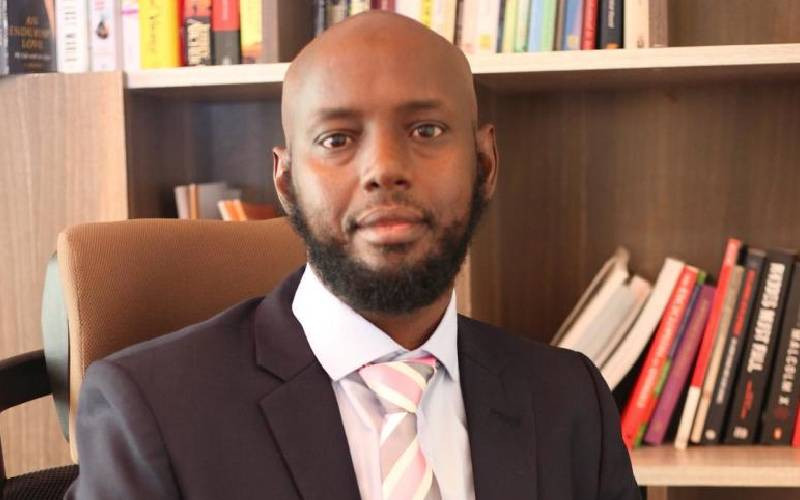
Mohamed Adow, the Director and Founder of think tank Power Shift Africa in Nairobi. [File, Standard]
Donald Trump’s order to withdraw the United States from 66 United Nations and international bodies is already being felt far from Washington.
In Taita Taveta, county officials and conservation managers are rechecking budgets as climate-funded programmes face fresh uncertainty.
Projects tied to global climate finance must now plan for delays and possible shortfalls, even as drought pressure continues to rise.
At the same time, America’s retreat from global rule-making forums is creating space for other powers to shape the standards that will govern energy, carbon markets and green industry in countries such as Kenya.
Taita Taveta offers a clear window into what the decision means on the ground, and for people.
The county’s Climate Change Action Plan for 2023–2027 is costed at Sh17.81 billion. It focuses on drought resilience, ecosystem restoration and livelihoods in a region where climate shocks arrive with increasing frequency. Like many county plans, it is aligned with national climate policy and global frameworks under the UN Framework Convention on Climate Change (UNFCCC).
- Immunisation still our strongest protection, though gaps persist
- Trump eases curbs on planet-warming gases used in refrigerants
- US plan for Ebola isolation facility in Kenya divides health workers
- Opposition to Trump, Ruto Ebola deal grows
Keep Reading
A key pillar of this work is Twende, a $34 million project supported through the Green Climate Fund.
The programme targets arid and semi-arid lands across several counties, including Taita Taveta, with a mandate to restore 500,000 hectares of rangelands and strengthen livelihoods for more than 620,000 people.
Paul Mwawasi, manager of the Mbale Transfrontier Conservancy in Taita Taveta, said the US withdrawal places projects such as Twende in a vulnerable position.
He warns of “indirect funding reductions” as global climate finance pools tighten and donor confidence shifts.
“When major contributors step back from the UNFCCC system, it affects pledges to funds like the Green Climate Fund,” Mwawasi said. “Counties then have to rely on already stretched local budgets, even as drought threatens conservancies and community livelihoods.”
The concern is not that projects will collapse overnight. The risk lies in slower approvals, delayed disbursements and funding gaps that disrupt long-term planning.
Ecosystem-based adaptation depends on continuity. Interruptions weaken restoration outcomes and raise costs later, especially in fragile rangelands.
These local worries trace back to a decision announced thousands of kilometres away.
In a presidential memorandum released by the White House, Trump directed US agencies to withdraw from international organisations and treaties deemed “contrary to the interests of the United States”.
The list includes the UNFCCC and the Intergovernmental Panel on Climate Change (IPCC), making the US the only country to step away from the global climate framework.
For countries like Kenya, the implications go beyond symbolism.
The UNFCCC anchors the climate finance architecture. The IPCC informs how climate risks are assessed and prioritised. Together, they guide how money flows, which projects qualify, and how accountability is measured. When a major economy exits, it sends a signal that ripples through donor behaviour and institutional confidence.
Mohamed Adow, director of Power Shift Africa, describes the withdrawal as “ignorant and reckless”, arguing that it undermines effective policymaking at a moment when climate impacts are intensifying worldwide.
“Political posturing cannot alter the underlying physics of greenhouse gas accumulation,” Adow said.
He warns that no amount of rhetoric can stop floods, droughts or wildfires, and that stepping away from global climate cooperation weakens collective capacity to respond.
Adow also argues that the decision harms the US itself by isolating it from solutions and economic opportunities emerging from the clean energy transition.
As funding uncertainty grows, a deeper shift is also under way. Climate institutions are not only platforms for environmental cooperation. They are arenas where economic influence is negotiated.
Joab Okanda, an international climate, energy and development policy expert, said influence belongs to those who remain engaged.
“These institutions are central arenas where economic, industrial and geopolitical interests are negotiated,” Okanda noted.
Former US climate envoy John Kerry has described the withdrawal as “a gift to China”, reflecting a broader concern that leadership vacuums rarely remain empty.
At the county level, adaptation strategies are already adjusting. Mwawasi points to efforts to diversify conservation finance.







 join
join