×

The Standard e-Paper
Home To Bold Columnists
 The Standard Group Plc is a
multi-media organization with investments in media platforms spanning newspaper
print operations, television, radio broadcasting, digital and online services. The
Standard Group is recognized as a leading multi-media house in Kenya with a key
influence in matters of national and international interest.

Audio By Vocalize
Drowned in our worries about Ebola, the threat of El Niño, the current drought, universities’ industrial action, the 2027 polls, and high fuel prices, we forgot about Nobel prizes, awarded in the first two weeks of October every year. The prizes epitomise academic research excellence and peacebuilding. Yet 125 years since the first Nobel prizes were given in 1901, they have had no equivalent or competitor.
They keep Sweden constantly on the map. The benefactor, Alfred Nobel, was a rich and affluent man after inventing dynamite. Yet he sponsored a peace prize. He held patents in many other inventions.
Why have our affluent men not sponsored such awards and immortalised their names? Think of Onyango, Ekai, Kamau, Nasibo, or Bagaja prizes? Are we thin on philanthropy or selfish?
Give credit, some corporations have been supporting causes like education with no accusation of greenwashing.
Back to the Nobel: who are the winners in 2026, and why did they win? Before getting academic, let’s say something about the laureates. Clearly, Africa is missing. That shows our reluctance to invest in research. Kenya puts only 0.8 per cent of GDP into Research and Development (R&D), says the National Research Fund in 2026.
The target is two per cent. Further, over 51 per cent of R&D is funded by development partners. The countries hosting laureates put much more into R&D.
The US and Japan have over 3. 0 per cent. Research is expensive, less visible and not attractive to politicians.
It’s hard to talk about the number of graduates or researchers in political meetings, or the number you expect to train. You can see roads, rails and skyscrapers but not the great ideas in someone’s mind. The private sector may not fund ideas whose returns are uncertain.
That is why the public funds research to underwrite that risk.
A few universities spawn Nobel prizes. They are well funded and supported, building a culture of excellence which is self-perpetuating. Frisberg (2026) notes a few leaders in getting Nobel Prizes: Harvard (124), Cambridge (102), and University of Chicago (96). What of our universities? How much money do they get for R&D from private and public sources?
One emerging worry is the belief that other universities are better than ours; we quote their research and put their car stickers on windscreens - check in high-end mall parking. Yet some Nobel laureates did research in Kenya. They include Michael Kremer, Elinor Ostrom, Joseph Stiglitz, and Wangari Maathai, among others. Why are women under-represented? They are two out of 10 laureates in 2026. Are they put off by the rigours of academia? Let’s hear from them. Clearly, patience pays; winning a Nobel at age 95 is not a small feat. The average age of 2026 laureates is 77.1 years. Research needs time and patience; sometimes your ideas aren’t identified as groundbreaking until many years later.
At times, after you are gone. Compare that with entrepreneurship, where you get your money or profit on the spot.
What research won Nobel prizes in 2026? And when do we expect our Nobel Prizes in science and economics?
Stay informed. Subscribe to our newsletter
We have had several peace and literature laureates in Africa.
The Nobel Prize website reports on the 2026 winners. In physiology and medicine, Karl Deisseroth and Peter Hegemann’s research was on “optogenetics — a method that makes it possible to show how nerve cells shape memories, feelings and behaviours in the living brain”.
It could one day help treat or understand conditions like Parkinson’s disease, depression, epilepsy, and anxiety.
In chemistry, Henri B Kagan and Kenso Soai got the Nobel for their “discoveries that have enabled chemists to drive chemical reactions that lead to homochirality”.
“They showed how chemical reactions can be driven to favour a single molecular mirror image, a key insight in the manufacture of pharmaceuticals”.
In Physics, Francis Halzen won for his work on “decisive contributions to the IceCube Neutrino Observatory and the discovery of high-energy neutrinos of astrophysical origin”.
Potential uses include communication, deep earth mining and exploration, and defence and nuclear safety.
In literature, Anne Carson won “for her bold and inventive oeuvre that, in playful dialogue with the classical tradition, has created new forms for contemporary literature”. In economics, Robert E Hall and Michael Woodford won for their work on “New Keynesian models that allow us to explain and quantify how stabilisation policy affects business cycles and are now used by central banks and finance ministries around the world”.
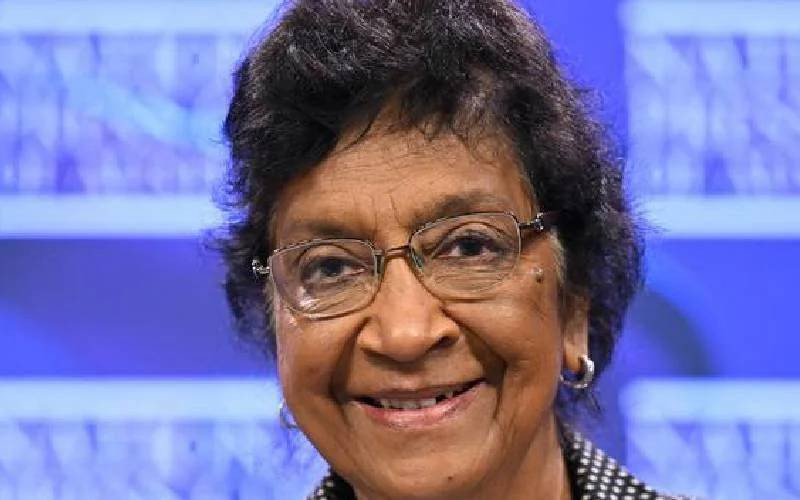
Finally, the Nobel Peace Prize went to Navi Pillay, a South African, “for her efforts to promote peace and international law”. Pillay “has shown that legal measures can help prevent acts of war and violence. She has also contributed to strengthening the institutions of international law”. As we wait for next year’s laureates, we should focus on strengthening our research. Nobel laureates’ research goes beyond publicity. The ideas are commercialised, creating jobs and economic opportunities. We must think beyond real estate and material things.
Great ideas are like an iceberg; the bigger part is invisible but can make all the difference.




Subscribe to our newsletter and stay updated on the latest developments and special offers!








 join