×

The Standard e-Paper
Join Thousands Daily
 The Standard Group Plc is a
multi-media organization with investments in media platforms spanning newspaper
print operations, television, radio broadcasting, digital and online services. The
Standard Group is recognized as a leading multi-media house in Kenya with a key
influence in matters of national and international interest.
The Standard Group Plc is a
multi-media organization with investments in media platforms spanning newspaper
print operations, television, radio broadcasting, digital and online services. The
Standard Group is recognized as a leading multi-media house in Kenya with a key
influence in matters of national and international interest.

Audio By Vocalize
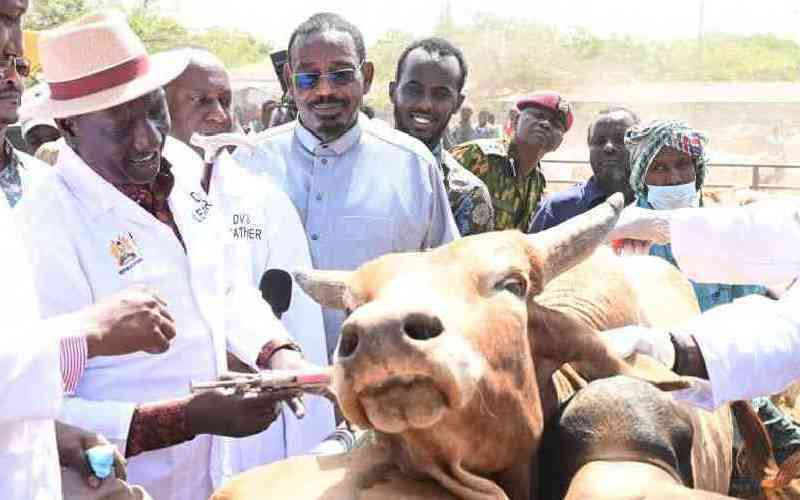
President William Ruto during the launch of livestock vaccination and the National Livestock Restocking Programme at Soko Ng'ombe in Garissa County on February 6, 2025. [PCS]
Kenya is positioning itself for a bigger share of the global livestock economy after securing the right to host the World Veterinary Association Congress in 2028, a move that could boost investment, tourism and confidence in the country’s animal products.
Kenya will become the first African country to host the prestigious global veterinary event, which is expected to bring more than 2,000 delegates and place the country at the centre of international discussions on animal health, food safety, disease control and livestock trade.
Kenya has also received international recognition for strengthening regulation of veterinary medicines, with veterinary surgeon Dr Josiah Mandieka receiving the World Veterinary Association Award for Veterinary Medicines Stewardship.
“This is a very humbling experience for Kenya. It demonstrates that Kenya has the capacity to manage veterinary medicines—from manufacturing and importation to distribution and responsible use,” Dr Mandieka said.
For the livestock industry, the recognition has major commercial implications. Strong regulation of veterinary medicines is critical to ensuring the safety of meat, milk and other animal products, while improving the confidence of international buyers and markets.
“Because Kenya manages veterinary medicines effectively, we are contributing to the global fight against antimicrobial resistance while assuring international markets that our animal products are safe,” Dr Mandieka said.
The award comes as antimicrobial resistance (AMR), climate change and emerging livestock diseases increasingly threaten food production and global trade.
A major step in Kenya’s regulatory journey was the establishment of the Veterinary Medicines Directorate (VMD) in 2017, the country’s first dedicated regulator for veterinary pharmaceuticals.
Dr Mandieka, who served as the agency’s pioneering Vice Chairperson for six years, was involved in developing policies and regulatory frameworks governing the manufacture, importation, distribution and use of veterinary medicines.
The livestock sector contributes about 12 per cent of Kenya’s Gross Domestic Product and between 40 and 42 per cent of agricultural GDP, according to the International Livestock Research Institute.
With millions of Kenyans depending on livestock for income and food, industry players say improved animal health systems could translate into higher productivity, safer products and stronger export opportunities.
Kenya Veterinary Association Honorary Secretary Carol Khaemba said hosting the 2028 congress would also create opportunities beyond the veterinary sector.
“We are the first African country to win this bid and host the World Veterinary Association Congress. This is a win not only for Kenya but for the entire African continent,” she said.
Stay informed. Subscribe to our newsletter
The event is expected to benefit the hospitality, tourism, transport and knowledge sectors as international professionals converge in Kenya.
However, veterinary professionals warn that the country must address regulatory enforcement gaps if it is to fully benefit from its growing international reputation.
“The laws already exist. What we continually ask government to do is ensure proper implementation, including enforcing animal welfare laws and ensuring only qualified professionals practise veterinary medicine,” said Kenya Veterinary Association Council Member Dr Daniel Muasya.
He said illegal slaughter, poor animal welfare and unqualified individuals administering veterinary drugs continue to pose risks to public health and the livestock economy.
As climate change alters disease patterns and increases pressure on livestock production, experts are calling for climate-smart farming, improved manure management and stronger integration of crop and livestock systems.
For Kenya, the 2028 congress is therefore more than a global honour. It is an opportunity to market the country as a destination for veterinary investment, strengthen confidence in its animal products and position the livestock sector for greater participation in regional and international trade.



Subscribe to our newsletter and stay updated on the latest developments and special offers!








 join
join