×

The Standard e-Paper
Fearless, Trusted News
 The Standard Group Plc is a
multi-media organization with investments in media platforms spanning newspaper
print operations, television, radio broadcasting, digital and online services. The
Standard Group is recognized as a leading multi-media house in Kenya with a key
influence in matters of national and international interest.

Audio By Vocalize
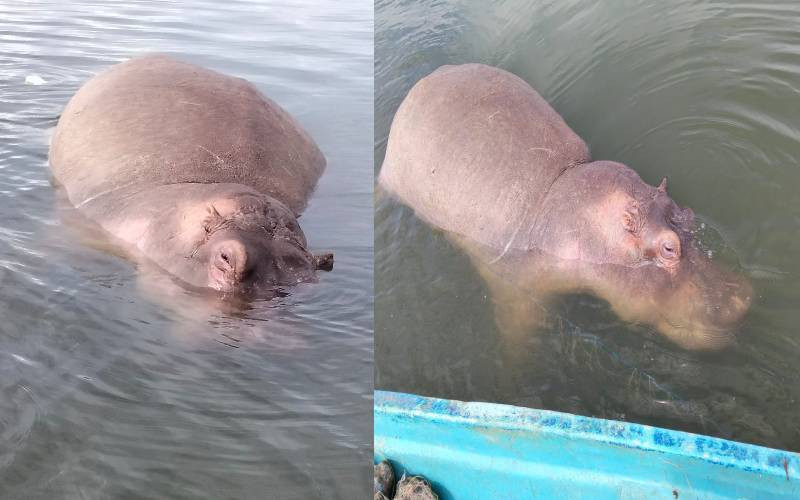
Fishermen and eco-tourism operators around Lake Naivasha have rejected a Kenya Wildlife Service (KWS) report that attributed the controversial deaths of hippos in the lake to maize stalks and fishing nets.
They have instead attributed the deaths to hunger after investors fenced off riparian land and electrocution by electric fences around the lake.
Currently, nine bloated hippos have been recorded in various parts of the lake, amid allegations that the number could be higher.
Last week, KWS released a post-mortem report which indicated that two of the animals died from eating fishing nets and maize stalks, leading to bloating.
According to Grace Nyambura, in charge of patrols on the lake, the report was a cover-up, as more investors continued to encroach on the riparian land, reducing pastureland.
Speaking after touring the lake, Nyambura said that the electric fences had worsened the situation, leaving the animals without any food and hence the deaths.
“We fear that the number of deaths could be more, as some have been killed by electric fences around the lake and it's time that riparian land was opened,” she said.
She added that KWS did not have a patrol boat to monitor the current situation and was relying on fishermen for information as the crisis in the lake deepened.
Nyambura added that the current situation had affected the fish market, as many consumers were unsure what had killed the wild animals.
“We are calling on KWS to urgently embark on fresh studies as to the cause of the deaths and make sure that they involve us, unlike the other time,” she said.
A fish trader, Beth Muthoni, said that the deaths had adversely affected their sales, which had fallen by over 50 per cent, as the cause of the deaths remained a mystery.
“This lake supports over 10,000 people directly and indirectly, and the hippos' deaths have affected every sector, and all we are calling for is an answer,” he said.
A fisherman, Ayub Kairukia, said this was the first time in years they had learned that hippos had died from eating fishing nets.
He tore holes in the KWS report, noting that it had ended up creating more confusion than clearing the air, as more carcasses continued to be spotted.
Stay informed. Subscribe to our newsletter
“I have been a fisherman in this lake for over 15 years, and we have never heard of hippos dying from eating fishing nets, and at that time the real problem was identified,” he said.
An eco-tourism operator, Stephen Njoroge, identified hippos as some of the attractions for hundreds of visitors, adding that the deaths spelt doom for the tourism sector.
“Definitely there is a problem, and we should start by addressing encroachment of riparian land and the electric fences which have left the animals hungry and very wild,” she said.







Subscribe to our newsletter and stay updated on the latest developments and special offers!