×

The Standard e-Paper
Smart Minds Choose Us
 The Standard Group Plc is a
multi-media organization with investments in media platforms spanning newspaper
print operations, television, radio broadcasting, digital and online services. The
Standard Group is recognized as a leading multi-media house in Kenya with a key
influence in matters of national and international interest.

Audio By Vocalize
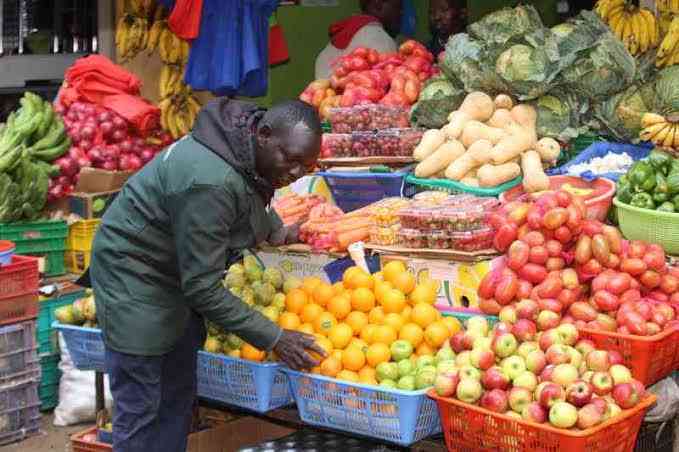
Every morning across Kenya, millions of families light up stoves to prepare a warm plate of ugali or mandazi for their children before school.
For decades, the primary concern around the dining table was simply ensuring there was enough food to go around. Yet behind the vital effort to fill bellies lies an invisible challenge that shapes the future of our nation: hidden hunger.
When essential vitamins and minerals are absent from daily diets, the consequences are subtle at first, but devastating over a lifetime.
According to the recent Kenya Demographic Health Survey, nearly one in five children (18 per cent) in Kenya suffer from stunted growth, a condition that permanently stifles both physical growth and brain development (KDHS, 2022).
Furthermore, one in three children are anaemic, posing a threat to their learning abilities and increasing the risk of infections due to compromised immunity.
Meanwhile, about a third of Kenyan women (36 per cent) are iron deficient, and 42 per cent of pregnant women are anaemic, thus increasing the likelihood of maternal deaths, especially due to haemorrhage during birth.
Compounding this crisis, the Kenya National Micronutrient Survey (2022) revealed that over 70 per cent of the population suffers from zinc deficiency, depriving millions of a vital mineral required for immune defence, child development, heart health, and fertility.
While these may seem like mere clinical statistics, they represent lost human potential, overburdened healthcare systems, and a direct drag on Kenya’s economic future.
Addressing micronutrient deficiencies at a national scale requires solutions that reach every kitchen, regardless of income.
This is why large-scale food fortification, the addition of vital nutrients like iron, zinc, vitamin A, and folic acid to staple foods (such as maize flour, wheat flour and oil) is universally recognised as one of public health’s most cost-effective strategies.
Kenya took a critical step years ago by mandating the fortification of salt, wheat flour, maize flour, and edible oils. Yet mandatory standards alone do not automatically translate to compliance.
For years, the burden of monitoring fell almost entirely on government inspectors attempting to oversee hundreds of facilities nationwide.
At the same time, fortification cannot be considered in isolation from food safety. In Kenya, aflatoxin contamination, particularly in maize and maize flour, remains an important food-safety concern.
This means that improving nutrition must go hand in hand with ensuring that the food reaching Kenyan households is safe.
Stay informed. Subscribe to our newsletter
Self-regulation
Real, sustainable change occurs when industry shifts from viewing fortification and food safety as a compliance burden to self-regulation, embracing it as a core duty and smart business strategy.
That shift is precisely what inspired the Cereal Millers Association and TechnoServe, through the Millers for Nutrition initiative, to co-create the Kenya Millers Fortification Index (KMFI) in 2022. KMFI replaced finger-pointing with peer benchmarking, transparency, and independent verification. The backbone of this approach is the 4PG Framework, an evaluation model assessing millers across key operational pillars: procurement of quality inputs (including fortificants and safe maize); people management, encompassing staff recruitment and training; production and Innovation, including fortificant (vitamins and minerals) dosing and digital lab controls on production lines; public engagement to build consumer awareness; and governance.
Credibility is protected through a multi-layered evaluation system combining internal self-audits and independent third-party verification by external experts. Equally important is the testing of sampled brands against national food safety and fortification standards in accredited laboratories.
The results have been transformative. By creating a transparent benchmark, millers are can now competing not just on price, but on quality, safety, and nutritional excellence.
Robust food safety and fortification practices have proven to improve operational efficiency, minimise input waste, strengthen brand reputation, and deepen consumer loyalty.
The Cereal Millers Association stepping up to lead the KMFI isn’t just an administrative hand off but rather proof that industry leaders are ready to champion quality and make accountability part of everyday business. However, building a resilient nutrition ecosystem cannot rely on processors alone but also trust.
As part of this transition, the launch of the national “Chagua Safe, Chagua Smart” campaign in April aims to empower everyday shoppers to recognise and demand certified safe and fortified staples.
Public health goals
Consumers should not have to choose between food that is nutritious or safe; they deserve both.
When mothers and fathers look for the mark of quality on flour bags and cooking oil bottles, market forces align with public health goals.
Kenya’s experience with the KMFI offers a blueprint for the wider region and the continent. It demonstrates that public-private support, where the government sets rigorous standards and private industry takes proactive ownership of compliance, delivers faster, more reliable outcomes than traditional enforcement alone.
As leaders from government, industry, and civil society gather for the 2026 KMFI Awards, we are celebrating a fundamental shift in how food security is defined in East Africa.
Quality is the technical foundation of good food, but trust is the bridge that connects processors to the communities they nourish.
By taking full ownership of fortification and food safety, Kenya’s milling industry is proving that nourishing a nation is both a collective responsibility and the ultimate mark of corporate leadership.
-The authors are Senior Programme Manager (East Africa) – IGNITE, TechnoServe and Programme Manager - Food Convergence Innovation for Africa (TechnoServe, respectively.






Subscribe to our newsletter and stay updated on the latest developments and special offers!