×

The Standard e-Paper
Stay Informed, Even Offline
 The Standard Group Plc is a
multi-media organization with investments in media platforms spanning newspaper
print operations, television, radio broadcasting, digital and online services. The
Standard Group is recognized as a leading multi-media house in Kenya with a key
influence in matters of national and international interest.
The Standard Group Plc is a
multi-media organization with investments in media platforms spanning newspaper
print operations, television, radio broadcasting, digital and online services. The
Standard Group is recognized as a leading multi-media house in Kenya with a key
influence in matters of national and international interest.

Audio By Vocalize
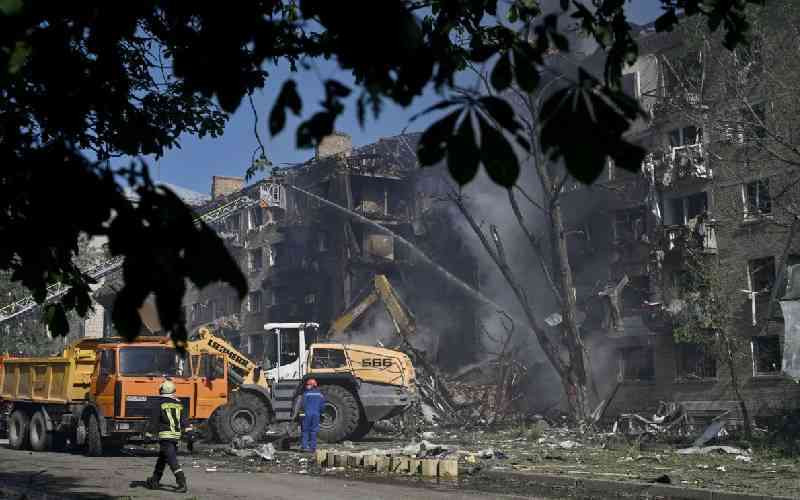
Today, Ukraine marks 35 years since the restoration of its independence. 1991 did not create Ukraine. It restored sovereignty to a nation whose history, culture, and identity long predated the previous version of the Russian Empire–the Soviet Union.
Independence meant far more than replacing one flag with another. It meant ending the claim of an imperial centre to define who Ukrainians were, to absorb our history, to suppress our language, traditions and institutions, and to decide our future from afar.
This pattern is familiar far beyond Ukraine. Nations that have emerged from colonial rule know that independence means more than formal sovereignty.
Russia’s full-scale invasion of Ukraine is an attempt to reverse history. Moscow expected Ukraine to collapse in three days. It expected our institutions to fail, our society to fracture, and our people to surrender. It failed. Ukraine stands.
The cost was terrible. Lives have been lost, families torn apart and entire communities scared. Yet our institutions keep working. Businesses operate. Farmers cultivate their land. Teachers do their work, doctors save lives and communities rebuild what Russian missiles and drones destroy. Ukrainians continue not only to defend their country, but to create, invest, and plan the future.
Ukraine has not disappeared. Our identity has not been erased. Our independence has not been surrendered.
We no longer wait for the next missile to arrive. We have built our own long-range capabilities and are increasingly taking the war back to the backbone of Russian economy that makes it possible, refineries, fuel networks and military-industrial facilities that supply and finance the Russian war machine. The country that was expected merely to survive has learned how to impose a cost of its own.
Russia has long relied on myths; the instruments of power, backed by one of the world’s most experienced propaganda machines. One of the most persistent was the image of the “world’s second army”. Ukraine has exposed the limits of that myth: After more than four years of full-scale war, Moscow has still failed to break our state, our society or our will to resist. That failure helps explain why Moscow increasingly relies on missiles and drones against civilians, and why it is recruiting foreigners to sustain a war it expected to win with its own forces. Africans, including Kenyans, have been deceived with promises of civilian work, only to end up fighting in a colonial war of conquest waged by Europe’s last imperial power, proof that behind Moscow’s promises of opportunity lies something much older and uglier: Exploitation.
The other myth, Moscow still falsely presents itself across Africa as a champion of sovereignty and anti-colonialism, while fighting in Europe to deny another nation the very freedom it claims to defend abroad.
The world has changed greatly since 2022 and so has the way countries respond to this war. Yet many have remained consistent on one essential point: Ukraine’s sovereignty is not negotiable.
We are deeply grateful to those who have stood by that principle, in votes at the UN General Assembly and, above all, in action.
Thirty-five years of independence are also a story of what Ukrainians have built.
A vibrant democracy. A strong civil society. A generation of entrepreneurs, engineers, artists and innovators. A country that feeds millions far beyond its borders, creates world-class technology and culture, and has repeatedly shown an extraordinary ability to reinvent itself.
War has tested all of this, but it does not define us.
Ukraine is not simply a country resisting destruction. It is a country building, even now. Ukrainians open businesses, develop new technologies, create art, educate their children and make plans for lives that extend far beyond the war.
Stay informed. Subscribe to our newsletter
And this is also Ukraine we want our partners in Kenya to know, not only a country at war, but a country of ideas, technology, agriculture, education, culture and people looking outward to the world.
Our relationship with Kenya should be part of that future, built not only on solidarity in difficult times, but on trade, innovation, food security, education and the practical opportunities that bring our societies closer together.
That is perhaps the clearest measure of our independence, after everything that has been thrown at us, we still believe in the brighter future.
Thirty-five years ago, Ukrainians chose to build a free country. Today, another generation is ensuring that this country will remain free, not merely to survive, but to prosper, create and contribute to the world.
We remain independent. We remain strong. And we want the world to know us not only as a country at war, but as the one that intends to use its freedom to build, trade, innovate and work with our partners who see us not only through the lens of resistance, but through the lens of opportunity.


Subscribe to our newsletter and stay updated on the latest developments and special offers!






 join
join