×
App Icon
The Standard e-Paper
Join Thousands of Readers
★★★★ - on Play Store
Download Now

Why government should play greater role in fight against GBV

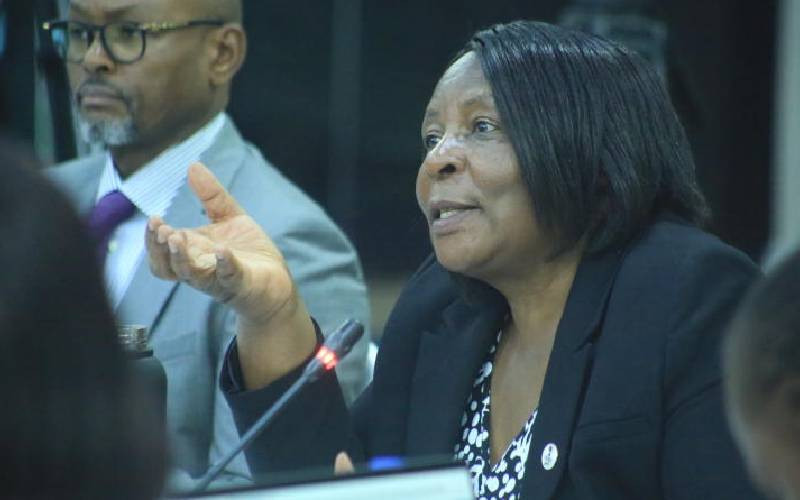
Chairperson of Technical working group on Gender Based Violence including Femicide Nancy Barasa during a stakeholder engagement at KICC , Nairobi on April 9th 2025.[Collins Oduor,Standard]

Still riding the wave of the just-concluded 16 Days of Activism against (GBV), the current conversation around its management has taken an unsettling turn. Allegations and counter-allegations of mismanagement and fraud among organisations working in the GBV space have exposed a deeper, systemic failure in how we respond to GBV as a country.

First, we need to acknowledge that NGOs largely exist because governments fail to meet critical needs of their citizens. In the case of GBV response, those gaps have become the norm rather than the exception, leaving the management of this sensitive function almost entirely to non-state actors.

Human rights are not aspirational. They are non-negotiable minimums owed to every citizen. GBV, in particular, is a complex, sensitive issue that cannot be outsourced to organisations whose operations are shaped by unpredictable dynamics of privately run entities. Protection of survivors, safe housing, psychological support, witness protection, legal redress and long-term rehabilitation cannot be left to the personal ambitions, goodwill or perceived integrity of individual founders.

The current model places extraordinary responsibility on non-state actors without corresponding oversight. Beyond registration, issuance of certificates and submissions of annual returns, who audits these organisations’ governance structures, internal accountability mechanisms and safeguarding practices? Who ensures that those entrusted with traumatised women and children operate under clear ethical standards, independent supervision and enforceable consequences when they fail? And when such organisations experience internal disputes or fall outs, what structures exist to ensure continuity of care for survivors? These are the conversations we must have, if for nothing else, then for the victims’ sake.


We are right to be angry and shocked at the conversations unfolding online but it is all misdirected. The more urgent questions should be directed at the Ministry of Gender and its commitment to managing GBV. How many government-owned, State-run safe houses exist in the country for instance? How many are staffed with medical and legal professionals? Is there a clear budget dedicated to the GBV crisis to ensure sustainability? And why have we found it okay to outsource such a sensitive service to entities built around individual leadership rather than resilient institutional structures?

We laud the individuals and organisations that have stepped up where the State has fallen short. Their work has saved countless lives and afforded survivors a chance to rebuild. However, the GBV sector cannot be driven by personal sacrifice or individual ambition alone. Such entities rise or fall based on their founders who ultimately determine their existence. And when the same leadership violate the very principles that defined their mission, how do you rebuild trust and assure future victims of safety when the moral authority of existing ones has been severely undermined?

Disturbing allegations have also emerged that some GBV cases may have been exaggerated or even worse, fabricated to attract donor funding. Nothing could be viler. If proven to be true what mechanisms exist to ensure investigation and legal redress? Equally concerning is when lies are weaponised to bring down such institutions whether by perpetrators who have thrived for lack of clear structures, or personal vendetta. Either way, it is survivors who ultimately pay the price.

The one thing we all cannot afford at this moment is silence. We cannot remain silent as the few organisations carrying the burden of GBV are under attack. We cannot look away as the lives and well-being of thousands of victims are compromised due to infighting that has nothing to do with them. Nor can we continue to tolerate a system in which the State plays a spectator role in an issue that is primarily its responsibility.

This is where feminist voice counts. This is where policy advocates must be loudest. Women leaders, in particular, should demand institutional reforms and structures that will shift the burden of GBV management from individuals to sustainable public systems. At the same time, NGOs in this space must be supported but also, firmly regulated. There can never be too much intervention as far as GBV management is concerned, only too little accountability.

Ms Wekesa is a development communication consultant