×

The Standard e-Paper
Home To Bold Columnists
 The Standard Group Plc is a
multi-media organization with investments in media platforms spanning newspaper
print operations, television, radio broadcasting, digital and online services. The
Standard Group is recognized as a leading multi-media house in Kenya with a key
influence in matters of national and international interest.
The Standard Group Plc is a
multi-media organization with investments in media platforms spanning newspaper
print operations, television, radio broadcasting, digital and online services. The
Standard Group is recognized as a leading multi-media house in Kenya with a key
influence in matters of national and international interest.

Audio By Vocalize
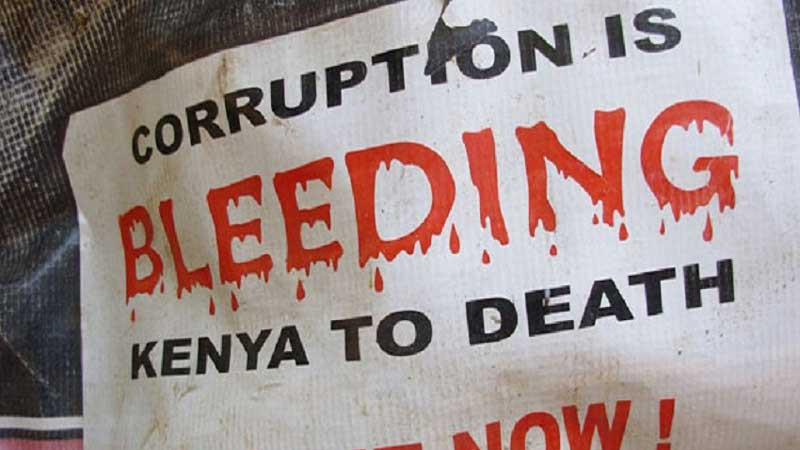
The normalisation of ethical compromise in society is often analysed through the lenses of economics or law, yet a deeper, more profound narrative lies within the realm of behavioral science and social psychology.
As a practitioner who has spent over 25 years observing the intersection of mental health and institutional structures, I have come to view the pervasive nature of corruption not merely as a series of legal infractions, but as a complex socio-psychological adaptation.
We are witnessing a collective shift in the national psyche—a state of moral desensitisation that arises when systemic inefficiencies become the baseline for daily survival.
In clinical terms, the human brain is wired for adaptation. When individuals exist within an environment where the standard path—whether in seeking healthcare, education, or licensing—is perceived as consistently obstructive, they develop what we call a "scarcity mindset."
This cognitive state prioritises immediate, short-term relief over long-term ethical frameworks. In such a landscape, the act of "facilitation" is no longer viewed by the actor as a moral failing, but as a rational navigation of a high-friction environment. This is not a lack of inherent character; it is a psychological response to what can be termed institutional anxiety.
Throughout my career in mental health and various medical leadership capacities, I have observed how chronic systemic stress erodes the social contract. When the perceived reliability of institutional structures fluctuates, the citizenry may experience a form of learned helplessness. This is the point at which outrage is replaced by apathy.
The emotional energy required to maintain constant moral indignation in the face of systemic bottlenecks is exhaustive; thus, the psyche normalizes the abnormal as a defense mechanism to preserve mental bandwidth.
However, the professional and ethical cost of this adaptation is significant. It fosters an "empathy deficit" where interactions become purely transactional. When we view every professional engagement through the lens of what can be gained rather than what can be contributed, we lose the human element that is essential to service delivery.
As someone deeply committed to the mentorship of the next generation of professionals, I am acutely aware that a society thrives only when its members believe that merit and integrity are viable, protected currencies.
The path forward is not found in the pathologization of the public, but in the restoration of institutional trust. We must recognize that mental wellness is inextricably linked to the predictability and fairness of our social environment.
By strengthening the transparency of our professional structures and fostering a culture of mentorship, we can begin to shift the collective psyche from survival to stability.
National recovery is, at its heart, a psychological project. It requires us to move beyond the transactional mind and return to a state where the ethical choice is also the most practical one. Only then can we ensure that the Kenyan spirit is defined not by how we circumvent our challenges, but by the integrity with which we overcome them.
The author has 25 years of experience in Kenya’s mental health sector.
Stay informed. Subscribe to our newsletter








Subscribe to our newsletter and stay updated on the latest developments and special offers!








 join
join