×

The Standard e-Paper
Home To Bold Columnists
 The Standard Group Plc is a
multi-media organization with investments in media platforms spanning newspaper
print operations, television, radio broadcasting, digital and online services. The
Standard Group is recognized as a leading multi-media house in Kenya with a key
influence in matters of national and international interest.

Audio By Vocalize
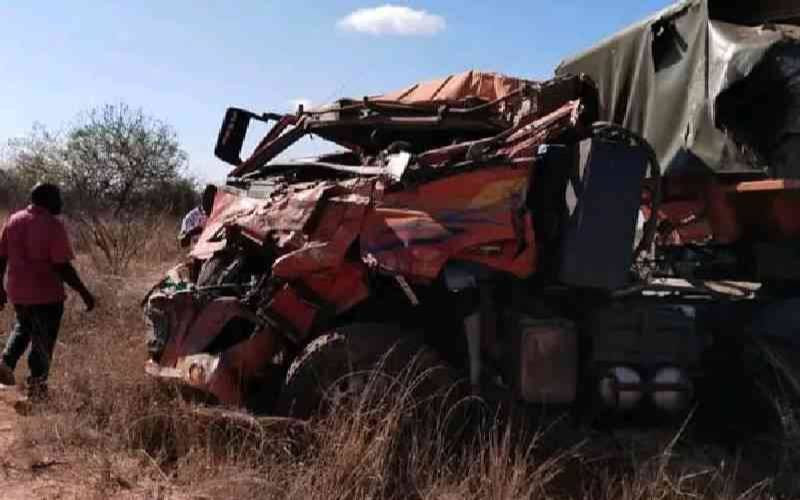
Twenty-four people died on Sunday when a bus carrying mourners from a pastor's funeral collided with a truck at Kanga, near Mtito Andei, on the Nairobi-Mombasa highway.
The crash came barely three weeks after 17 people, most of them pilgrims, were killed at Salama on the same road, a stretch the National Transport and Safety Authority (NTSA) had already flagged as crash-prone. Losing 41 lives on one highway within a month cannot be dismissed as misfortune, and NTSA now wants accidents declared a national emergency. Unfortunately, that alone cannot be the silver bullet to road carnage.
NTSA recorded 2,150 road deaths in the first half of 2026, representing an 11 per cent increase in the same period in 2025. Between January 1 and October 4, NTSA counted 3,995 deaths, which is about 14 deaths a day. Elsewhere, the Government Spokesperson put the death toll at 9,002. This discrepancy must be explained because the government cannot manage a crisis whose size its own officials cannot agree on. Whichever number is correct, NTSA estimates that crashes cost the economy about Sh450 billion a year.
The causes of road crashes are documented; they include speeding, reckless overtaking, poor lane discipline, drunk driving, unroadworthy vehicles and dangerous road sections. The timing is also known. NTSA's July data showed that Friday to Sunday accounted for more than half of all crashes, and that 8 pm to 9 pm was the deadliest hour. Road safety advocates say long-distance heavy trucks feature in a large share of fatal crashes. None of this is a mystery, which leaves enforcement as the central question.
Traffic police and NTSA officers have often been accused of taking bribes to let unroadworthy vehicles and drunk drivers continue on their way, which makes them accomplices to every death that follows. The Michuki rules, introduced in 2004, showed what sustained enforcement of speed governors, seat belts and passenger limits can achieve. They lapsed, were revived in 2018, and lapsed again. Alcoblow tests and speed guns reappear each festive season and are then put away. Seasonal enforcement compounds the problem.
Three measures are overdue. First, Alcoblow and speed guns must be deployed daily on major highways, day and night, supplemented by automated speed cameras that leave less room for corruption. Second, heavy trucks should be restricted from long-distance travel at night, when visibility is poor and fatigue is highest. Third, every officer or inspector found to have taken a bribe must be prosecuted and dismissed, and vehicles found unfit must be removed from the road rather than fined and released.
The President has ordered inspections of public service vehicles. That order must be carried out continuously, not just for a week. Kenyans are dying in numbers the State would not tolerate from any other cause. These deaths can be prevented, and the officials responsible for preventing them must be held to account.





Subscribe to our newsletter and stay updated on the latest developments and special offers!