×

The Standard e-Paper
Stay Informed, Even Offline
 The Standard Group Plc is a
multi-media organization with investments in media platforms spanning newspaper
print operations, television, radio broadcasting, digital and online services. The
Standard Group is recognized as a leading multi-media house in Kenya with a key
influence in matters of national and international interest.
The Standard Group Plc is a
multi-media organization with investments in media platforms spanning newspaper
print operations, television, radio broadcasting, digital and online services. The
Standard Group is recognized as a leading multi-media house in Kenya with a key
influence in matters of national and international interest.

Audio By Vocalize
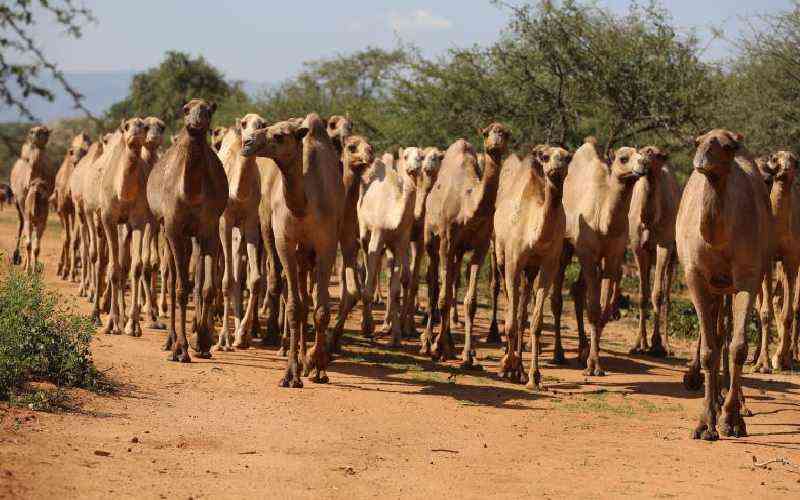
A fresh conflict has erupted between the Taita Taveta County Government, residents and illegal herders from outside over non-payment of cess and diminishing water and pasture following the onset of the drought, which has taken a heavy toll in the region.
The herders have invaded the lowland areas of the county in droves with hundreds of livestock in search of water and pasture, causing conflict with local farmers amid blame games over who has sanctioned their movement into the area.
Senior county government officials said the herders who have been invading the region at night have no livestock movement permits for health proof and destination clearance, which poses a danger to the local herd.
County Chief Officer (CCO) for Agriculture Stephen Mcharo said the county has of late been hit by frequent illegal movement of livestock from outside, especially camel incursions, without complying with the law.
The CCO confirmed that lowland areas of the county are the hardest hit by livestock incursions without movement permits from the veterinary department in the area where the animals are located and a letter of no objection from the intended destination.
Mcharo noted that the influential herders who have been invading the region at night do not meet these requirements and requisite safety standards.
This can lead to faster spread of animal diseases, warned the CCO.
Addressing stallholders and farmers in a hotel in Wundanyi town, the official noted that the county was losing a lot of revenue as the herders are not paying cess to the county government.
“The untouchable herders have been transporting livestock belonging to powerful individuals in lorries into the county designated as a disease-free zone to fatten their animals for export.
As the escalation continues, angry villagers from the Kasigau location drive hundreds of camels to Rukanga Police Station and dump them there, with each side accusing the other of receiving hefty bribes to allow illegal herders in settlement areas and Tsavo National Park.
The villagers criticised the police officers for being compromised to protect the herders. Three villagers were arraigned in connection with the incident.
They claimed the animals belong to influential government officials who have been illegally grazing and destroying local farms with impunity and in full knowledge of the law enforcement officers.
The residents called for the transfer of all police officers at the station, accusing them of protecting illegal herders despite constant pleas from them.
They wondered why three members of their community were arrested when they peacefully drove and dumped camels at the police station.
Stay informed. Subscribe to our newsletter
The police, however, accused some corrupt NGAO officials and some community members in the area of receiving substantial amounts of money from the herders to allow them to graze their animals freely, resulting in conflicts.
Voi Sub-County Police Commander Fredrick Kenaibei blamed some chiefs and community members for the conflict between locals and herders.
“We are not protecting the herders as claimed by the public. Some chiefs and community members are the ones who have been receiving bribes to allow the herders to fatten their animals for export, hence causing conflicts in the area.
Those making noise about the camel's invasion have not eaten anything,” clarified the police commander.
“Our work is only to protect the lives and property of Kenyans. Let those who received money from the herders pay back and should stop shifting blame to the police,” stated Mr Kenaibei.
The police officer said the sub-county security committee held a consultative meeting where villagers abused the deputy county commissioner.
He said the security committee and the community arrived at a resolution that residents should form a committee to end hostilities.
“We advised the local community to form a committee that will be responsible for approving grazing fees for the herders for the benefit of the local community. We also agreed that villagers should agree with the herders who have paid money for their animals to graze on the timelines of grazing, but up to now they have not formed the committee,” stated Kenaibei.
“We are aware that some corrupt community members and NGAO officials have been colluding with the herders to secretly enter livestock into the area with some charges,” said the police officer.
He maintained that some NGAO officials in cahoots with community members are taking bribes to allow illegal grazing for their own selfish interest.
“The residents know exactly who has been taking bribes to allow illegal grazing. Those who have not eaten anything are inciting others to protest, and we will not allow anybody to take the law into their own hands,” warned Kenaibei.
“The land belongs to the local community, and they can decide on what to do with it. The community can decide to sign agreements with anybody for a fee, with timelines in a transparent and accountable manner for the benefit of the local community.
But the problem is that some community members and NGAO officials are not transparent and accountable. As for the police force, we are not part and parcel of any illegal land deals,” the police officer further stated.






Subscribe to our newsletter and stay updated on the latest developments and special offers!








 join
join