×

The Standard e-Paper
Fearless, Trusted News
 The Standard Group Plc is a
multi-media organization with investments in media platforms spanning newspaper
print operations, television, radio broadcasting, digital and online services. The
Standard Group is recognized as a leading multi-media house in Kenya with a key
influence in matters of national and international interest.
The Standard Group Plc is a
multi-media organization with investments in media platforms spanning newspaper
print operations, television, radio broadcasting, digital and online services. The
Standard Group is recognized as a leading multi-media house in Kenya with a key
influence in matters of national and international interest.

Audio By Vocalize
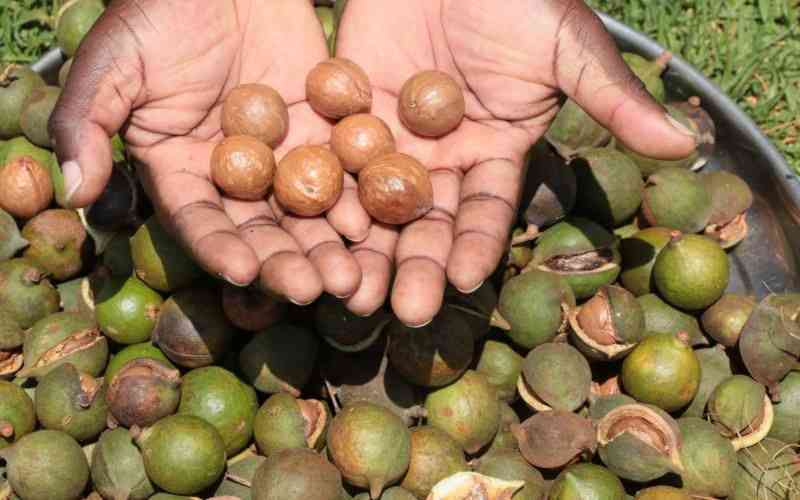
The macadamia sector is facing its most difficult period in years, with stakeholders warning that the problems extend beyond the current debate over export bans of raw nuts.
While political decisions continue to dominate public discussions, industry players say the real crisis lies in declining quality, poor farm management practices, pest infestations, immature harvesting, and a weakening global market.
The latest dispute is whether the government should maintain restrictions on the export of raw macadamia nuts or reopen export markets to absorb surplus production.
Recently, Agriculture Cabinet Secretary Mutahi Kagwe warned local processors that he will lift the export ban if they fail to purchase all nuts produced by farmers.
However, Michael Gatua, a member of the MACNUT Association of Kenya and of Sagana Nuts, argues that policy changes alone will not solve the underlying problems.
Gitau says the sector is trapped in a cycle of policy shifts as policymakers focus on exports while ignoring challenges that continue to erode quality and profitability.
"We keep swinging between opening and closing export windows as if that is the main issue. The real problem is that we are producing fewer quality nuts," he said.
One of the most significant challenges, experts say, is insect damage, which processors estimate accounts for nearly 20 per cent of losses in some production areas.
Many smallholder farmers do not spray their orchards at all due to high input costs and inadequate extension support, industry players say.
As a result, pests attack developing nuts, reducing kernel quality and lowering processing recovery rates. Industry data indicates that many processors are currently achieving recovery rates of only between 10 and 14 per cent, significantly below potential levels compared to South Africa’s 30-35 per cent.
Experts estimate that with proper pest management and regular spraying programmes, recovery rates could increase to approximately 25 per cent, substantially improving returns for both farmers and processors.
"Farmers are losing money before the nuts even leave the farm," says Gatua. "The quality issues begin in the orchard. If spraying is done consistently, recovery rates can improve significantly, and farmers will earn more from the same harvest."
Immature harvesting has emerged as another major concern. Stakeholders estimate that between 20 and 25 per cent of macadamia nuts entering the market are harvested before reaching full maturity.
The problem intensified following previous policy decisions that opened marketing windows earlier in the season, encouraging traders and brokers to purchase nuts before they were fully developed. This season opened on 1st February, when the maturity rate stood at five per cent.
Stay informed. Subscribe to our newsletter
Researchers and industry players argue that in several parts of the Mt Kenya region, macadamia nuts reach optimum maturity in mid-March. Yet pressure from buyers often encourages farmers to shake trees and harvest prematurely to secure quick cash.
Benard Sitati, a MACNUT Association member and also a processor, says premature harvesting remains one of the most damaging practices in the industry.
"Many farmers are harvesting before the nuts are ready because they need immediate cash or are responding to pressure from brokers," says Sitati. "But immature nuts hurt everyone in the value chain and damage Kenya's reputation in export markets."
Poor post-harvest handling practices are further undermining quality. Industry stakeholders report that brokers frequently purchase nuts from farmers and hold them for extended periods while waiting for better prices or bulk quantities.
During storage, the nuts are often kept under unsuitable conditions, exposing them to moisture and mould development. Once mould sets in, the nuts lose quality and become unsuitable for premium export markets.
Although Kenya has introduced traceability mechanisms intended to monitor the movement of macadamia nuts through the supply chain, enforcement remains inconsistent.
"The brokers are becoming part of the problem," says Sitati. "Some hold nuts for weeks in poor storage conditions, and by the time they reach processors, the quality has already been compromised. Traceability systems should help identify where quality losses occur."
Kenya's production challenges are being compounded by structural imbalances within the industry. The Agriculture and Food Authority (AFA) has licensed approximately 40 processors with a combined installed capacity estimated at nearly 200,000 metric tonnes annually. Yet national production remains around 50,000 metric tonnes.
This mismatch has intensified competition for raw nuts, encouraging aggressive buying practices that sometimes undermine quality standards.
The situation mirrors challenges experienced after the temporary lifting of the export ban in 2023. Chinese buyers entered the market aggressively and purchased an estimated 15,000 metric tonnes of nuts using advanced quality-testing technologies. While this helped absorb excess stock, local processors were left competing for lower-quality nuts.
The long-term result has been declining recovery rates, reduced processor profitability, and increased uncertainty throughout the value chain.
Allegations of smuggling and informal trade continue to surface. In one notable incident, the Kenya Revenue Authority intercepted three containers at the Port of Mombasa carrying approximately 27,000 kilograms of in-shell macadamia falsely declared as tarpaulins.
Such incidents have reinforced concerns about regulatory enforcement and the effectiveness of current market controls.
As the debate over export bans continues, a growing consensus is emerging among stakeholders that Kenya's macadamia industry cannot rely on policy shifts alone to restore competitiveness.








Subscribe to our newsletter and stay updated on the latest developments and special offers!








 join
join